
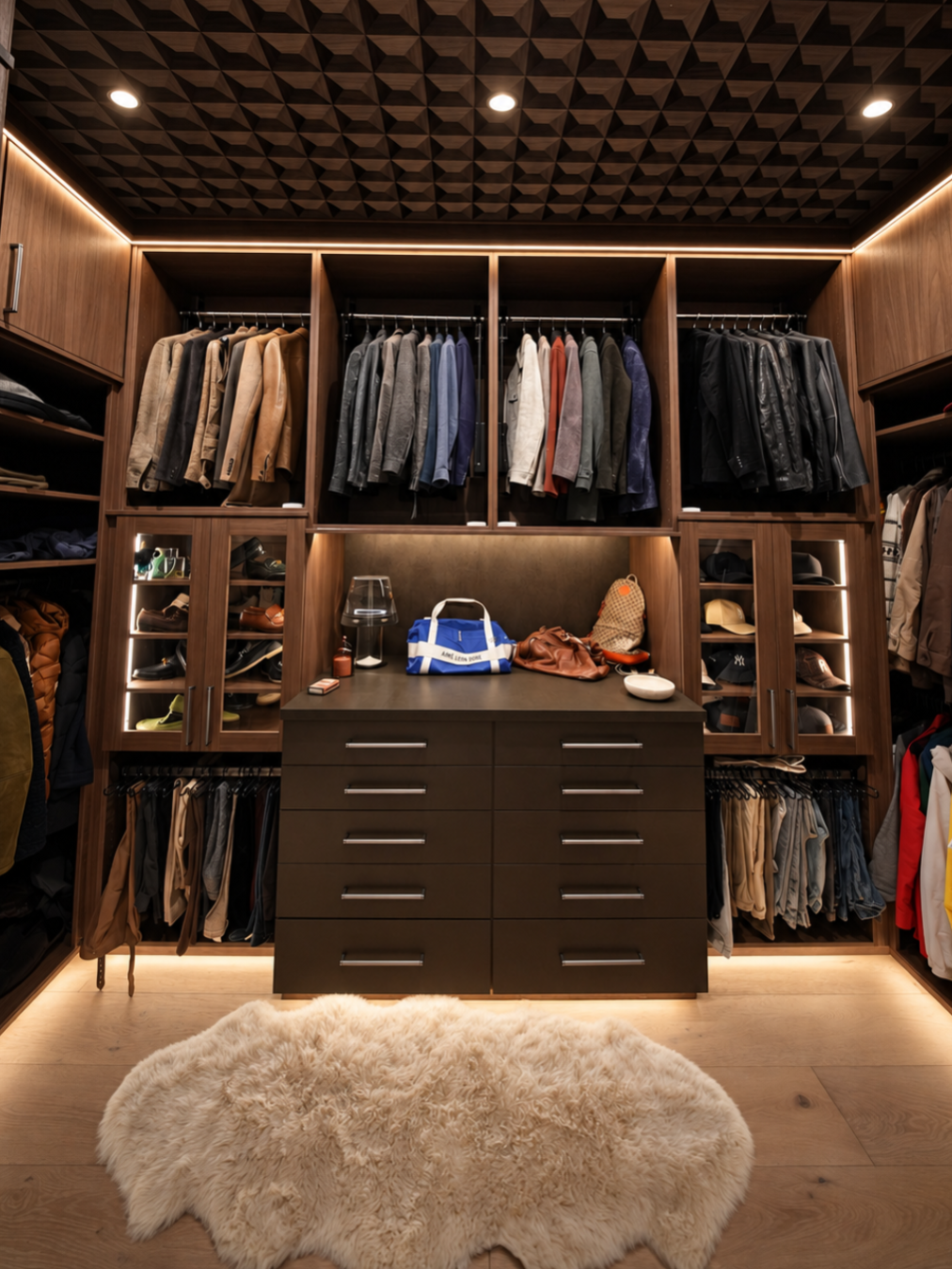
The first cool morning hits, and suddenly we’re ready for all of it: chunky sweaters, boots, jackets, scarves, and every cozy layer we forgot we owned.
There’s just one tiny problem.
Where is it all going to go?
Transitioning your wardrobe from summer to fall can make even a normally organized closet feel a little crowded. Lightweight summer clothes are competing with bulky sweaters. Boots need significantly more room than sandals. Jackets are back in the rotation.
Before sweater weather officially takes over, give your closet a little seasonal reset.
Whether you have a spacious walk-in or are trying to maximize a smaller closet, these fall closet organization ideas can help you make room for the season ahead and identify where a better storage system could make all the difference. Read all the way to the end for your Fall Closet Checklist.
1. Start With a Fall Closet Edit
Before adding fall clothes to your closet, take a look at what’s already occupying valuable space.
Pull out anything you didn’t wear this spring or summer and ask yourself:
- Did I actually wear this?
- Does it still fit?
- Is it damaged or worn out?
- Would I buy it again today?
- Does it need to stay in my everyday closet?
Donate, sell, repair, or relocate anything that no longer deserves prime closet real estate.
Then separate your truly seasonal summer pieces. Swimsuits, beachwear, and other warm-weather items don’t necessarily need to remain front and center through fall and winter.
Closet organization tip: Don’t organize things you don’t actually want. Decluttering before reorganizing makes it much easier to see how much storage you really need.
2. Make Room for the Sweaters
We love a chunky sweater.
Our shelves? Slightly less enthusiastic.
Sweaters take up considerably more room than summer tops, which means the storage system that worked beautifully in July might start feeling cramped by October.
Instead of hanging heavy sweaters, consider folding them to help maintain their shape. Adjustable shelving can be particularly helpful because shelf heights can be adjusted around the clothing you’re storing.
Avoid creating one giant sweater tower too. It may look organized at first, but then pulling out the sweater at the bottom sends the entire stack tumbling.
Smaller, categorized stacks are much easier to maintain.
Try grouping sweaters by:
- Everyday vs. dressy
- Lightweight vs. heavyweight
- Cardigans vs. pullovers
- Color
The right custom closet shelving can turn bulky fall clothing from a storage headache into one of the prettiest sections of your closet.
3. Give Your Boots the Space They Deserve
Boot season has entered the chat.
Ankle boots, tall boots, hiking boots, dress boots… they all take up more room than the sandals and sneakers you’ve been reaching for all summer.
Before placing every pair on the floor, rethink your shoe storage.
Dedicated closet shoe shelving can keep footwear visible, organized, and off the floor. Adjustable shelves are especially useful because you can create different heights for sneakers, ankle boots, and taller footwear.
For tall boots, consider boot inserts or shapers to help them stand upright instead of folding over one another.
Quick tip: Put your most worn fall shoes at eye level or within easy reach. Special-occasion and less worn pairs can live higher or lower in your closet.
Your everyday favorites deserve the VIP spots.
4. Rethink Your Hanging Space
Fall wardrobes aren’t just bigger. They’re longer.
Jackets, coats, cardigans, dresses, and layered outfits can change how much hanging space you need.
A closet with one rod stretching from wall to wall may look simple, but it can leave a surprising amount of valuable vertical space unused.
A thoughtfully planned custom closet system can incorporate different hanging heights based on your wardrobe, including:
- Double hanging sections for shirts and pants
- Longer sections for dresses and coats
- Dedicated areas for jackets and cardigans
- Valet rods for planning tomorrow’s outfit
This is where custom closet design becomes especially useful. Rather than forcing your wardrobe into a standard layout, design around your wardrobe.
5. Don’t Let Scarves, Hats, & Accessories Take Over
Fall accessories are small individually.
Collectively? They’re plotting against you.
Scarves get tangled. Hats lose their shape. Gloves somehow separate from their partners. Belts disappear behind other clothes.
Instead of throwing everything into one basket, give smaller accessories dedicated storage.
Consider:
- Divided drawers for scarves and gloves
- Hooks for frequently worn accessories
- Drawer inserts for jewelry and watches
- Dedicated shelving for handbags
- Baskets for seasonal pieces
- Pull-out accessories for belts and other small items
Try this: Create a small “fall favorites” area with the accessories you wear the most often. Keeping everyday pieces together makes getting dressed faster, while less-used items stay neatly stored elsewhere.
6. Rotate, Don’t Relocate Everything
Seasonal closet organization doesn’t mean packing your entire summer wardrobe into mystery bins and sending it into the abyss.
Utah weather has other plans.
September and October can bring warm afternoons and chilly mornings, so keep staple pieces accessible. Lightweight shirts, denim, dresses, and layering pieces can bridge the gap between seasons.
Move summer items out of your highest-priority storage areas, then bring sweaters, jackets, and boots forward.
Think of your closet like a retail store. The items you’re most likely to reach for should be the easiest to see and access.
When the seasons change again, rotate.
A closet designed with adjustable shelving and flexible storage makes this process significantly easier because your system can adapt as your wardrobe changes throughout the year.
7. Look Up: You’re Probably Missing Storage
If you’re running out of closet space, look above your current hanging rods and shelving.
See that awkward space near the ceiling?
That’s storage.
Upper shelving and cabinetry can be perfect for seasonal pieces you don’t need every day. Instead of stuffing everything into the most accessible parts of your closet, use vertical space strategically.
This is especially valuable when trying to maximize a small closet. More square footage isn’t always the answer. Sometimes you just need to use of the square footage you already have better.
8. Add Lighting Before the Days Get Shorter
Fall doesn’t just bring heavier clothes, it brings shorter days.
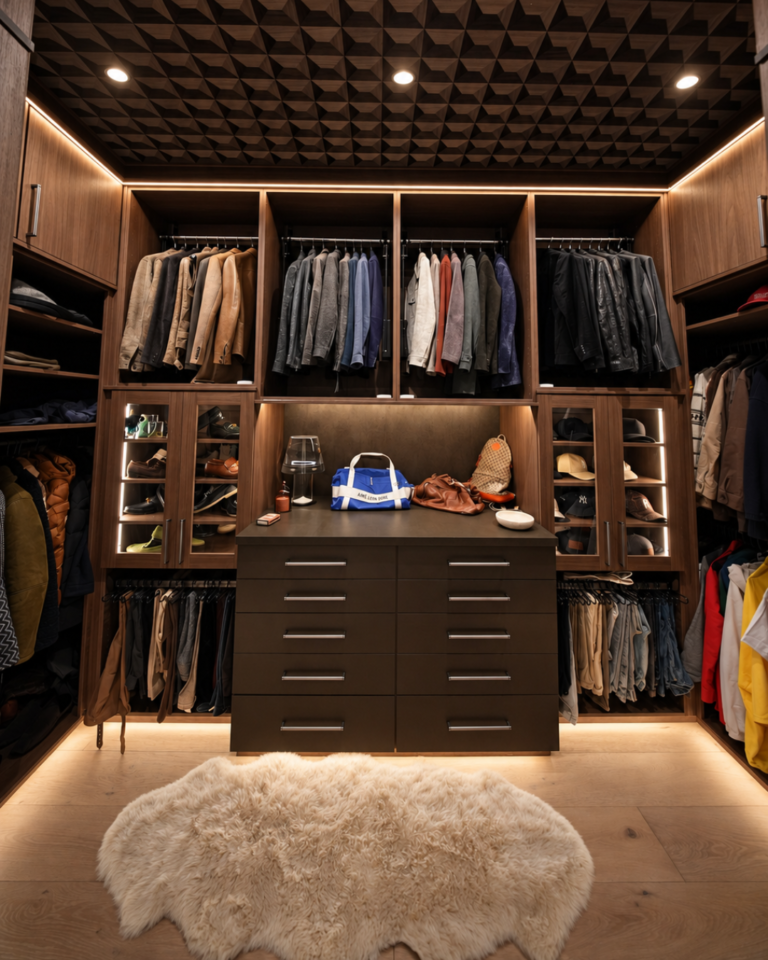
Good closet lighting can make your space easier to use while highlighting your wardrobe and custom storage.
Integrated lighting can illuminate shelving, hanging areas, shoe displays, and cabinetry so you’re not trying to distinguish navy from black in a dark corner at 7:00 in the morning.
It also adds something organization alone can’t quite achieve: atmosphere.
Suddenly getting dressed feels a little less like searching through a storage space and a little more like shopping your own boutique.
And we’re very much here for that.
9. Pay Attention to What’s Still Frustrating You
Once you’ve completed your seasonal closet reset, don’t immediately walk away.
Use your closet for a week or two and notice what isn’t working.
Are shoes still ending up on the floor?
Are your sweaters constantly overcrowded?
Do you need drawers but have shelves you barely use?
Can you never find your accessories?
These little annoyances can tell you a lot about what your closet actually needs.
A beautiful closet is great. A beautiful closet that makes your morning easier is better.
That’s why custom closet organization isn’t about squeezing in as many shelves and rods as possible. It’s about designing the storage around the person using it.
Your Fall Closet Checklist
Before officially declaring your closet sweater-weather ready, run through this quick checklist:
☐ Donate or remove summer clothes you didn’t wear
☐ Move purely seasonal summer pieces out of prime storage areas
☐ Bring sweaters and cardigans forward
☐ Fold heavy knits instead of hanging them
☐ Make space for boots and fall footwear
☐ Bring jackets and coats into your regular rotation
☐ Organize scarves, hats, gloves, belts, and accessories
☐ Move your most-used pieces to areas that are easiest to reach
☐ Use upper shelving for less frequently needed items
☐ Check that your closet lighting works for darker mornings
☐ Identify shelves, rods, or drawers that aren’t being used efficiently
☐ Reward yourself for finally dealing with that one pile
When Organizing Isn’t the Problem
Sometimes another round of organizing bins isn’t going to fix it.
If you’ve decluttered, folded, categorized, rotated, and rearranged everything but your closet still feels crowded, the problem may be the closet itself.
Builder grade closets are generally designed to provide basic storage, not storage tailored to your wardrobe or routine.
A custom closet can make better use of the available space with features such as adjustable shelving, multiple hanging heights, drawers, shoe storage, accessory organization, cabinetry, lighting, and other personalized details.
Ready for Sweater Weather?
Your fall wardrobe deserves more than one overcrowded rod and a mountain of sweaters.
Explore custom closet design and organization solutions at www.theclosetbutler.com and discover how thoughtful storage can make your everyday routine feel a while lot easier.
